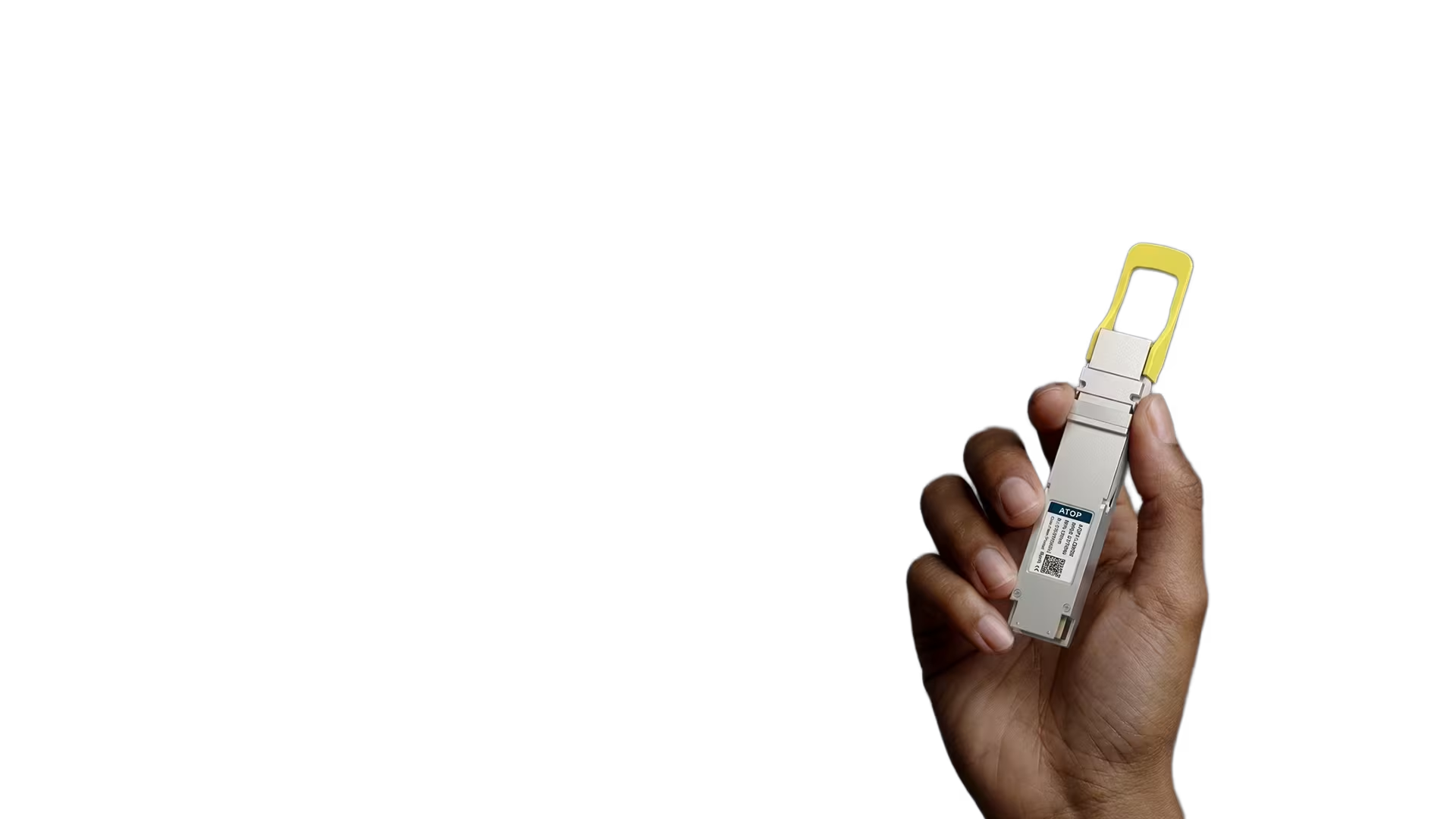
AI Optical Interconnect Customer Architecture Guide

ATOP product mapping for NVIDIA AI factory, Neo Cloud and Emerging AI deployments

Ultra Low Power 22W

ATOP's 1.6T DR8 achieves best-in-class performance with Marvell Ara 3nm DSP, typical power consumption

CX7 / CX8 / CX9

Full cross-generation compatibility supported by ATOP

3rd-party

Switch interoperability validation available under NDA
Designed for architects and infrastructure teams planning 400G, 800G and 1.6T optical links in AI data centers.

Architecture Selector: Which ATOP Product Fits Each Network Path

Network ArchitectureNetwork InfrastructureNVDIA P/NATOP P/NDescriptionApplication
H100 / H200 / B200 SuperPODQuantum-2 NDR400 + ConnectX-7MMS4X00-NM
MMS4X00-NS400
MMS1X00-NS400
APOP31KCDMD8T
APOP31HCDMD4A
APQPB31KCDMD4A
800G OSFP 2x400G DR4
400G OSFP DR4
400G QSFP112 DR4
Compute fabric and 400G links
B300 deploymentConnectX-8 + Quantum-X800 XDRMMS4A20
MMS4A00
MMS4X00-NM16
MMS4X50-NM
MMS4X00-NS400
MMS1X00-NS400
APOP31KCDMD4C
APOP31KCDMD8E
APOP31KCDMD8R
APOP31KCDLF8F
APOP31HCDMD4A
APQPB31KCDMD4A
800G OSFP DR4
1.6T OSFP 2x800G DR4
800G OSFP DR4
800G OSFP 2xFR4
400G OSFP DR4
400G QSFP112 DR4
Server-to-leaf and XDR fabric
Rubin NVL8 / XDRConnectX-9 + Quantum-X800MMS4A20
MMS4A00
APOP31KCDMD4C
APOP31KCDMD8E
800G OSFP DR4;
1.6T OSFP 2x800G DR4
Scale-out compute fabric
800G Ethernet fabricSpectrum-X / 800G Ethernet leaf-spineMMS4X00-NM16
MMS4X50-NM
APOP31KCDMD8R
APOP31KCDLF8F
800G OSFP DR4
800G OSFP 2xFR4
Switch-to-switch, leaf-spine
400G-to-800G migrationBreakout from 800G switch portsMMS4X00-NM
MMS4X00-NS400
MMS1X00-NS400
APOP31KCDMD8T
APOP31HCDMD4A
APQPB31KCDMD4A
800G OSFP 2xDR4
400G OSFP DR4
400G QSFP112 DR4
2x400G breakout and staged migration
Storage / in-band managementBlueField / Ethernet storage fabricMMS1X00-NS400
MMS4X00-NM16
APQPB31KCDMD4A
APOP31KCDMD8R
400G QSFP112 DR4
800G where required
Storage and management traffic

Rule of thumb: 100G/lane optics remain central for NDR400, DR8/FR8 Ethernet and breakout. 200G/lane optics are the forward path for B300/Rubin class XDR  deployments. ATOP supports both paths, which helps customers avoid a single-generation product gap.
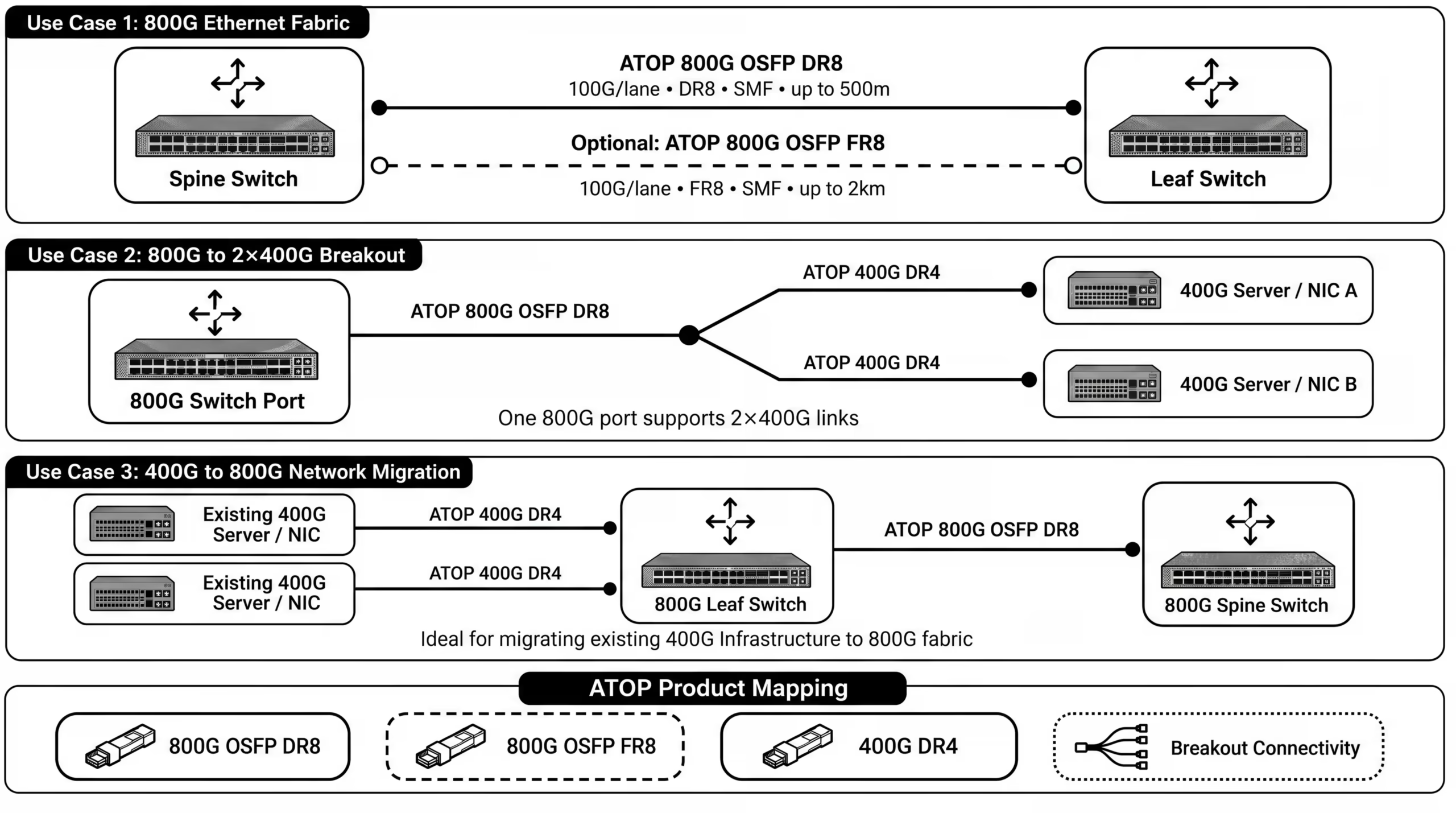
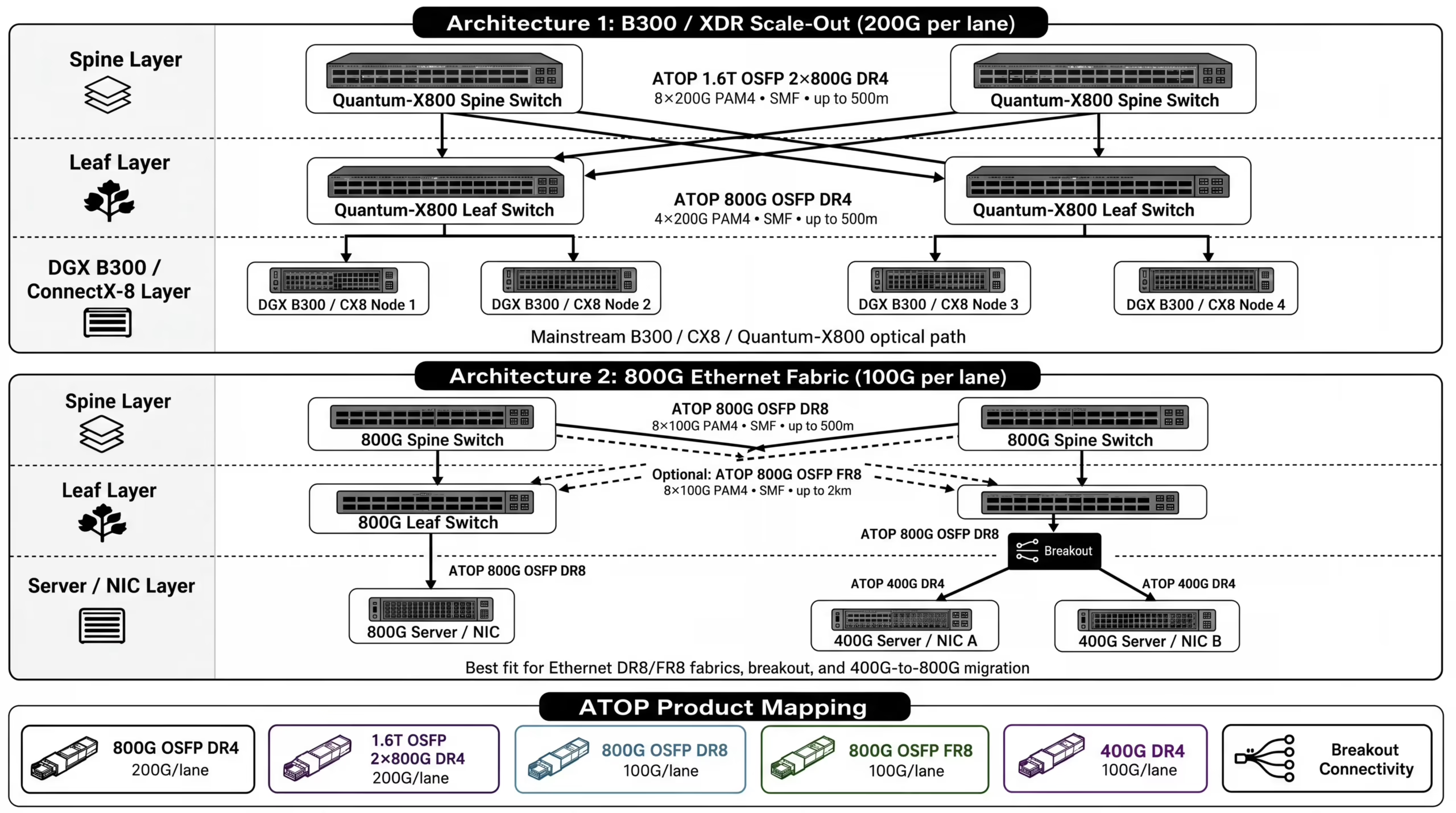
800G DR8 / FR8 Deployment Topology

800G DR8 Typical Deployment Topology

100G/lane Ethernet DR8/FR8, 2x400G breakout and 400G-to-800G migration mapping.
Best for Ethernet fabric and migration paths
Best fit for 100G-per-lane 800G Ethernet, breakout, and 400G-to-800G upgrade scenarios.
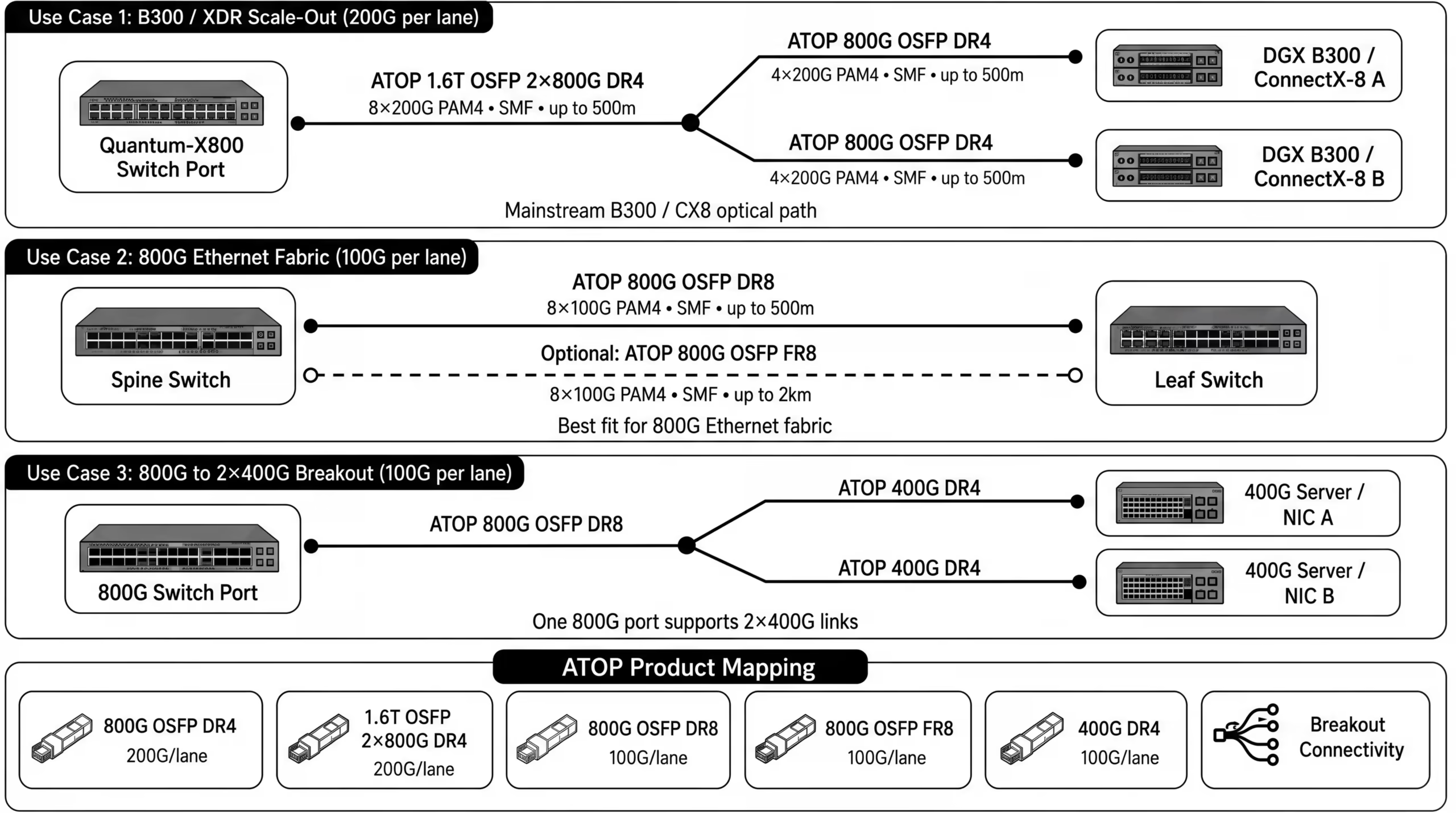
B300 Network Topology and Product Mapping

B300 Network Topology

Side-by-side view of B300 200G/lane XDR path and 100G/lane Ethernet/breakout path.
Use to avoid mixing DR4 and DR8 requirements
200G/lane products serve B300 / ConnectX-8 / Quantum-X800. 100G/lane products serve Ethernet DR8/FR8 and breakout scenarios.
B300 Network Architecture: Layer-by-Layer Link Mapping

B300 Network Architecture and Link Mapping

Every layer-to-layer link is mapped to the corresponding ATOP product family.
200G/lane vs 100G/lane clearly separated
200G/lane products serve B300 / ConnectX-8 / Quantum-X800. 100G/lane products serve Ethernet DR8/FR8, breakout, and migration scenarios.
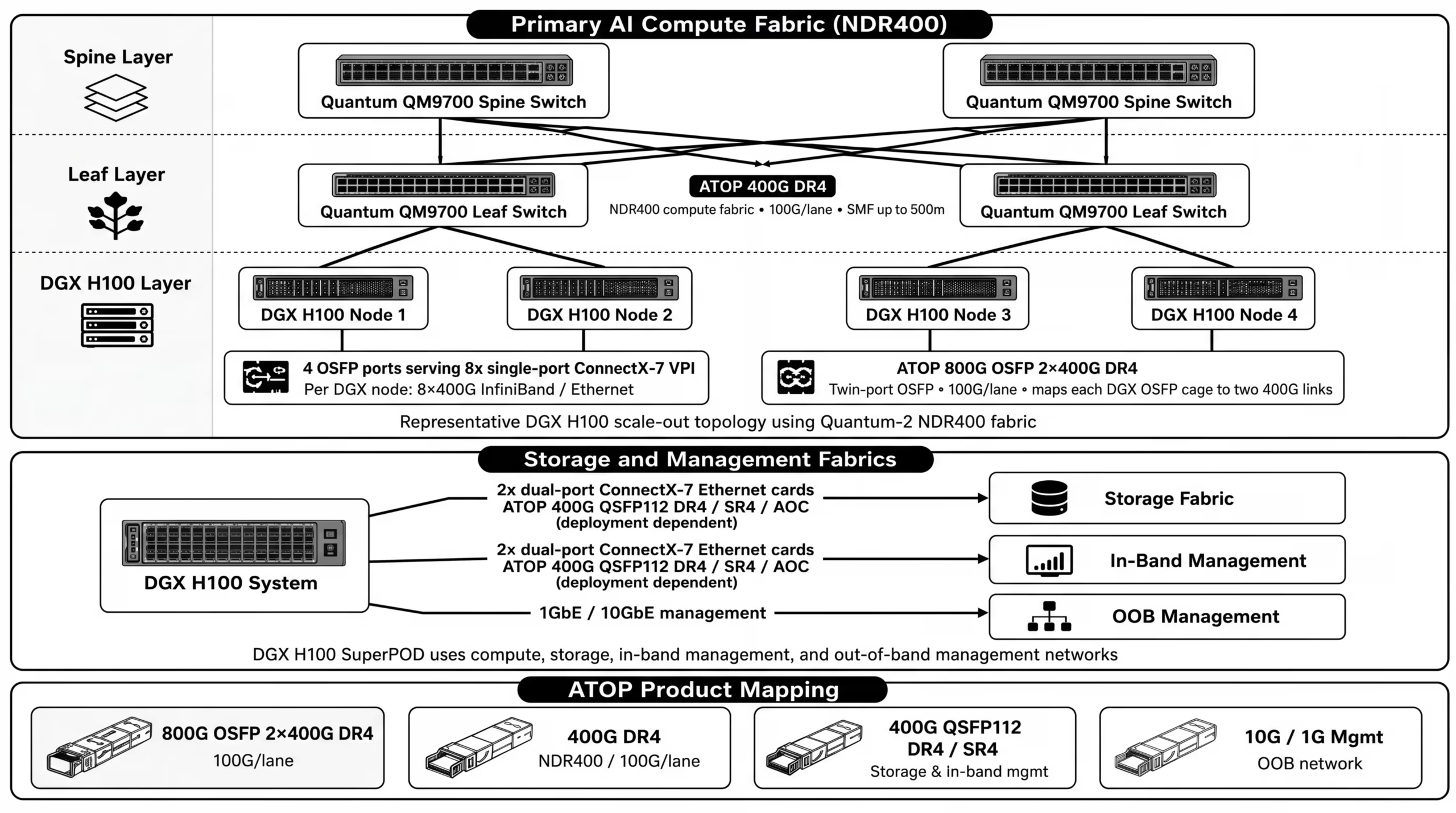
DGX H100 Network Architecture and ATOP Module Mapping

DGX H100 Network Architecture and ATOP Module Mapping

H100 NDR400 compute fabric and storage/management network mapping.
ConnectX-7 / 400G NDR400 path
H100 uses eight 400G compute connections via ConnectX-7; ATOP's main opportunities are 800G OSFP 2×400G DR4 at the DGX port layer and 400G optics in the NDR400 fabric.
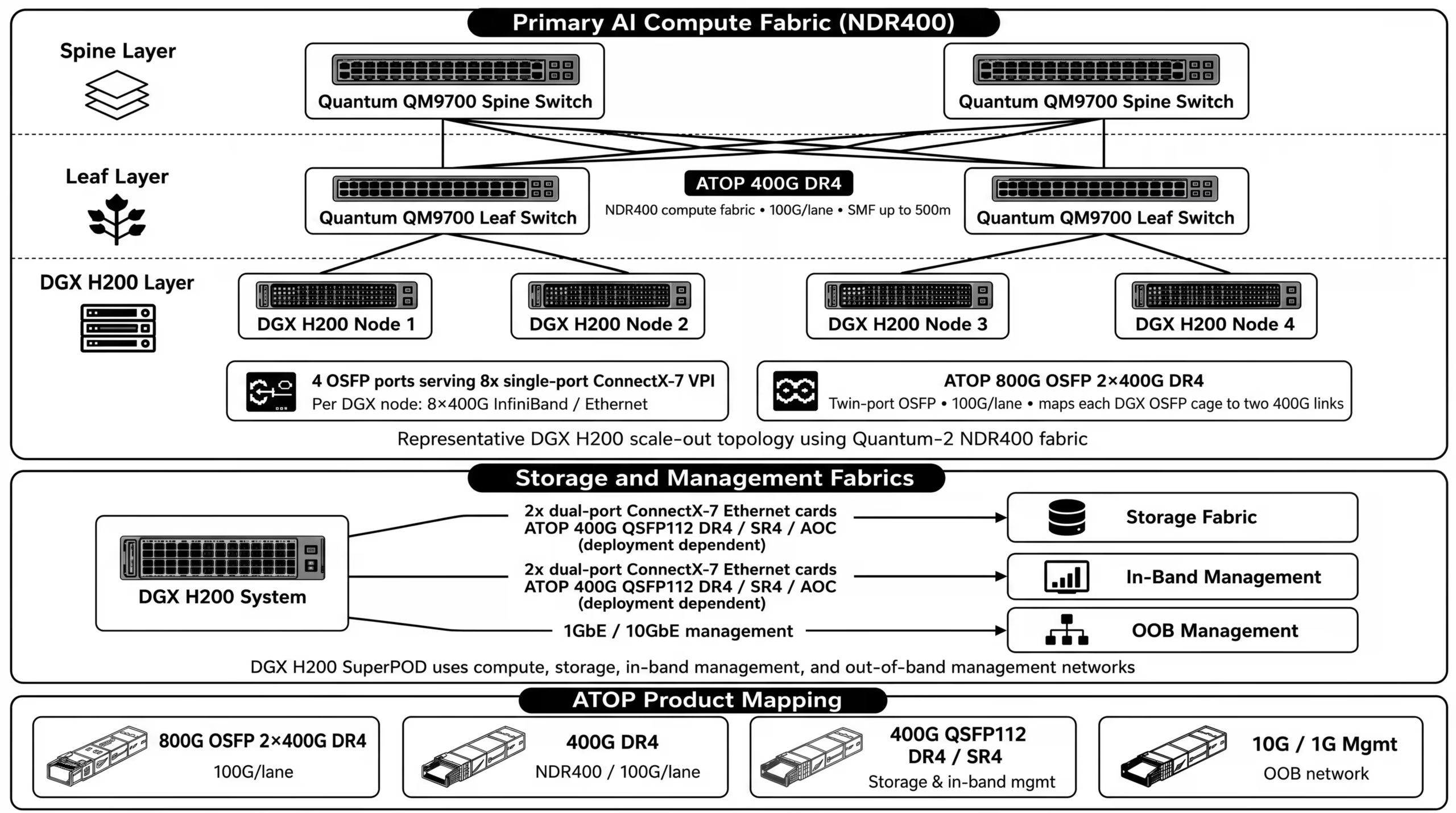
DGX H200 Network Architecture and ATOP Module Mapping

DGX H200 Network Architecture and ATOP Module Mapping

H200 NDR400 compute fabric and storage/management network mapping.
ConnectX-7 / 400G NDR400 path
H200 uses eight 400G compute connections via ConnectX-7; ATOP's main opportunities are 800G OSFP 2×400G DR4 at the DGX port layer and 400G optics in the NDR400 fabric.
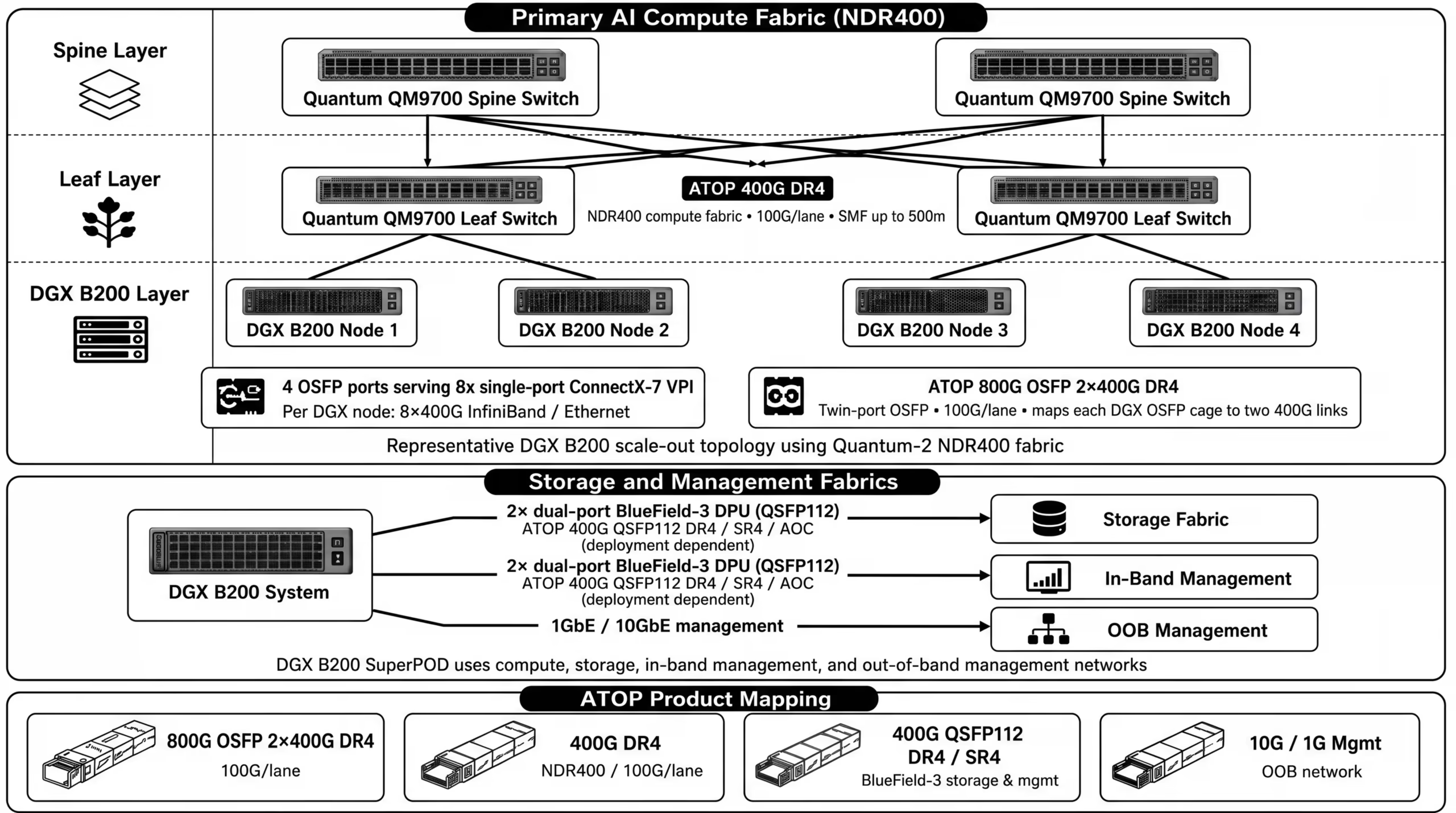
DGX B200 Network Architecture and ATOP Module Mapping

DGX B200 Network Architecture and ATOP Module Mapping

B200 compute fabric and BlueField-3 storage/management mapping.
ConnectX-7 + BlueField-3
B200 uses eight 400G compute connections via ConnectX-7; ATOP's main opportunities are 800G OSFP 2×400G DR4 at the DGX port layer and 400G optics in the NDR400 fabric.
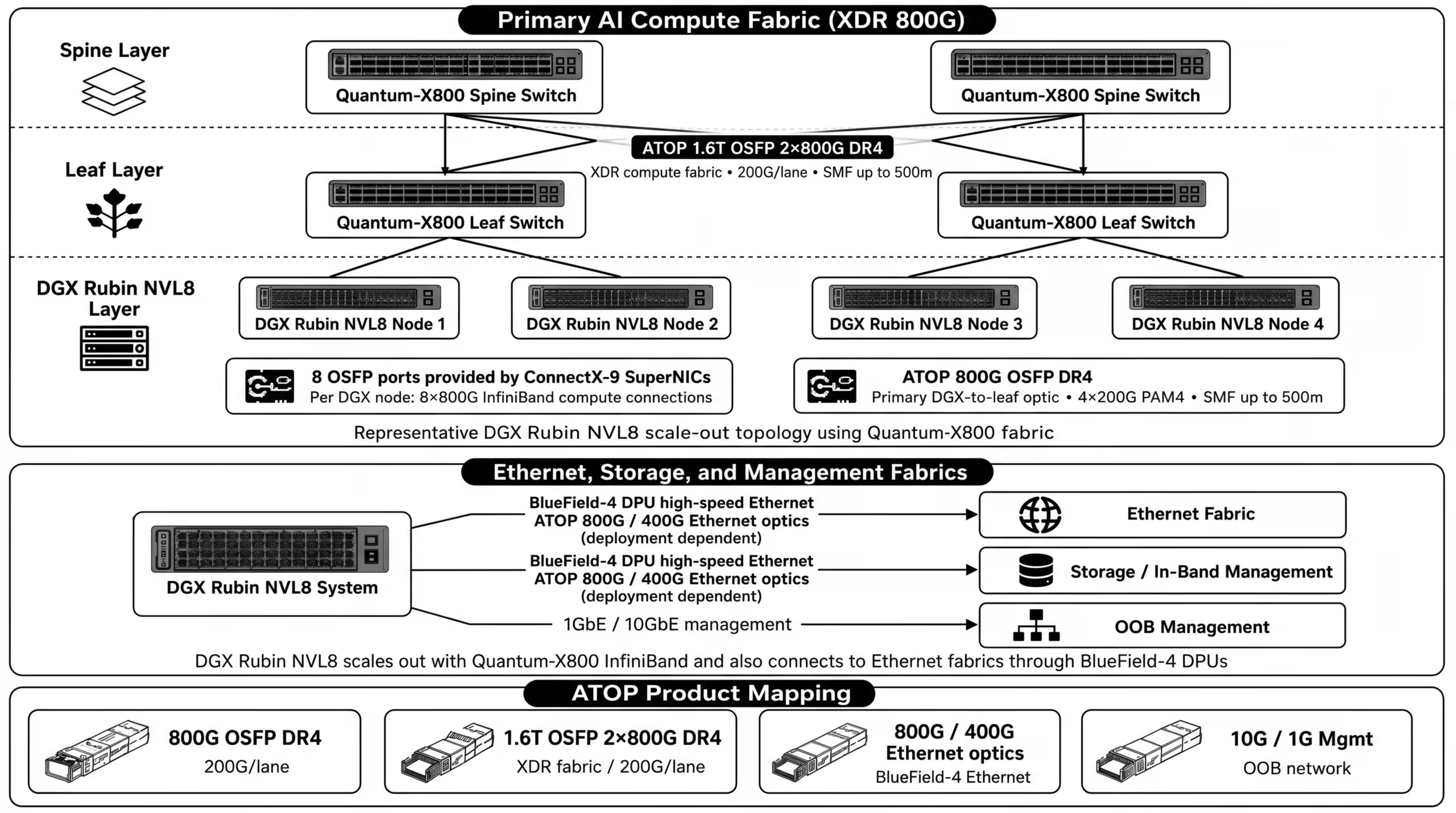
DGX Rubin NVL8 Network Architecture and ATOP Module Mapping

DGX Rubin NVL8 Network Architecture and ATOP Module Mapping

Rubin NVL8 XDR compute fabric, ConnectX-9 and BlueField-4 Ethernet/storage mapping.
ConnectX-9 / XDR 800G path
Rubin NVL8 uses 800G ConnectX-9 compute ports; ATOP's main opportunities are 800G OSFP DR4 at the DGX-to-leaf layer and 1.6T OSFP 2×800G DR4 in the Quantum-X800 fabric.

What This Guide Helps You Decide

This guide is written for customer architects, Neo Cloud infrastructure teams and Emerging AI operators who need to map optical modules to actual AI cluster network layers - not just compare transceiver datasheets. It summarizes where ATOP products fit, what has been tested, and what should be verified before deployment.

Ultra low power 22W

Power advantage

ATOP’s 1.6T OSFP 2xDR4 typical power; final thermal result depends on SKU, airflow and host cage design.

800G DR4/1.6T DR8

Primary 200G/lane path

For B300/Rubin class XDR paths: server-to-leaf 800G DR4 and fabric 1.6T 2xDR4.

800G DR8

Primary 100G/lane path

For H100/H200/B200 NDR400, Ethernet DR8/FR8, breakout and 400G-to-800G migration.

ODVT+Interop

Validation coverage

Third-party test reports show optical/electrical margins, switch compatibility and FEC stability.

Market Positioning for End Customers

Leverage ATOP as your fast optical interconnect partner for AI cluster deployment, qualification and scaling.
Use this guideline to select the right module family by architecture layer: 100G/lane vs. 200G/lane, compute vs. Ethernet/storage, switch-to-switch vs. server-to-leaf.
Each architecture page serves as a link-by-link planning reference for BOM configuration, cabling layout, thermal design and interoperability testing.
ATOP offers full support for samples, coding, interoperability trials and deployment troubleshooting across all customer target platforms.

Confidence message to architects

ATOP combines high-speed optical module engineering, 800G/1.6T product coverage, independent validation data and responsive support. The goal is simple: help customers qualify and deploy optics quickly without losing engineering control of link performance.

Independent Validation Summary

ATOP supplements internal qualification with third-party optical, electrical and switch interoperability validation. The reports provided cover 800G OSFP DR8 and 400G QSFP-DD DR4 products, including voltage/temperature corners, optical spectrum and power, TDECQ, receiver sensitivity, BER, FEC behavior, hot-swap, fiber pull, link flap and channelization checks.

Pass across key test

800G OSFP DR8 ODVT

1310nm, 500m SMF, 0-70C, 16W total power dissipation in the report.

Atsrista 7060DX5

800G switch interop

Switch compatibility, alarms, channelization and BER passed; zero uncorrected codewords reported

500m SMF

400G QSFP-DD DR4

400G DR4 ODVT and Arista 7060DX4 compatibility evidence available.

CX7 / CX8 / CX9

ConnectX coverage

ATOP compatibility work spans three NVIDIA ConnectX generations; detailed logs available for customer trials.

1. Electrical perfomance(TP1/TP4)

TP1
Operating conditionsLaneVoltage[V]ValueUnitVerdict
Differential Output VoltageL13.3524.16mVPass
Eye HeightL13.369.83mVPass
Near End Eye WidthL13.317.21PSPass
Far end ISIL13.3-5.38%Pass
ESMWL13.30.16UIPass
TP4
Electrical TransmitterSpec MinSpec maxunits
Differential Voltage, pk-pk 900mV
Far End ISI-4.52.5%
ESMW  UI
Near-end Eye Width at 10-6 probability (EW6)4.99 ps
Near-end Eye Height at 10-6 probability (EH6)70 mV
Far-end Eye Width at 10-6 probability (EW6)3.76 ps
Far-end Eye Height at 10-6 probability (EH6)30 mV

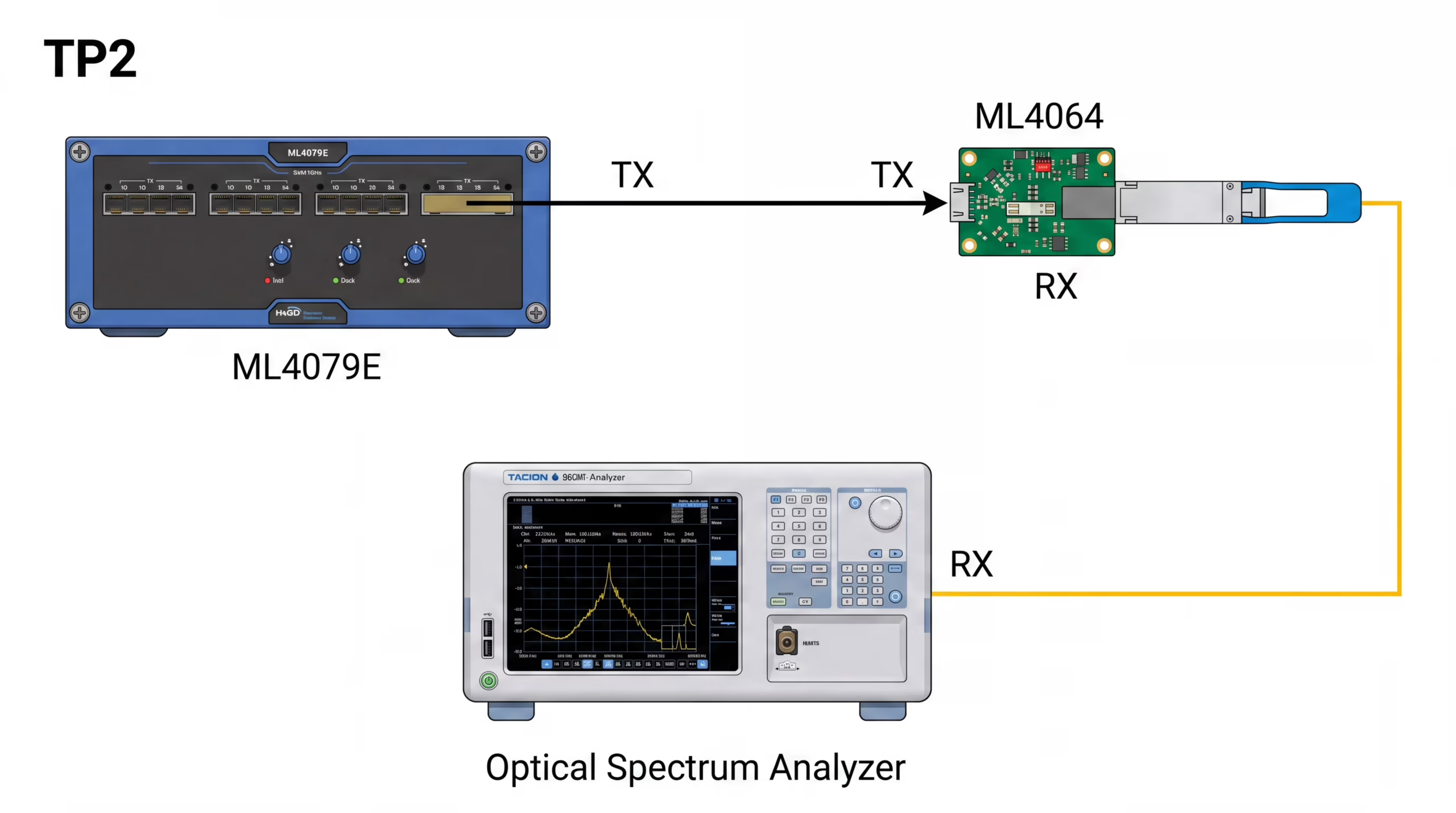
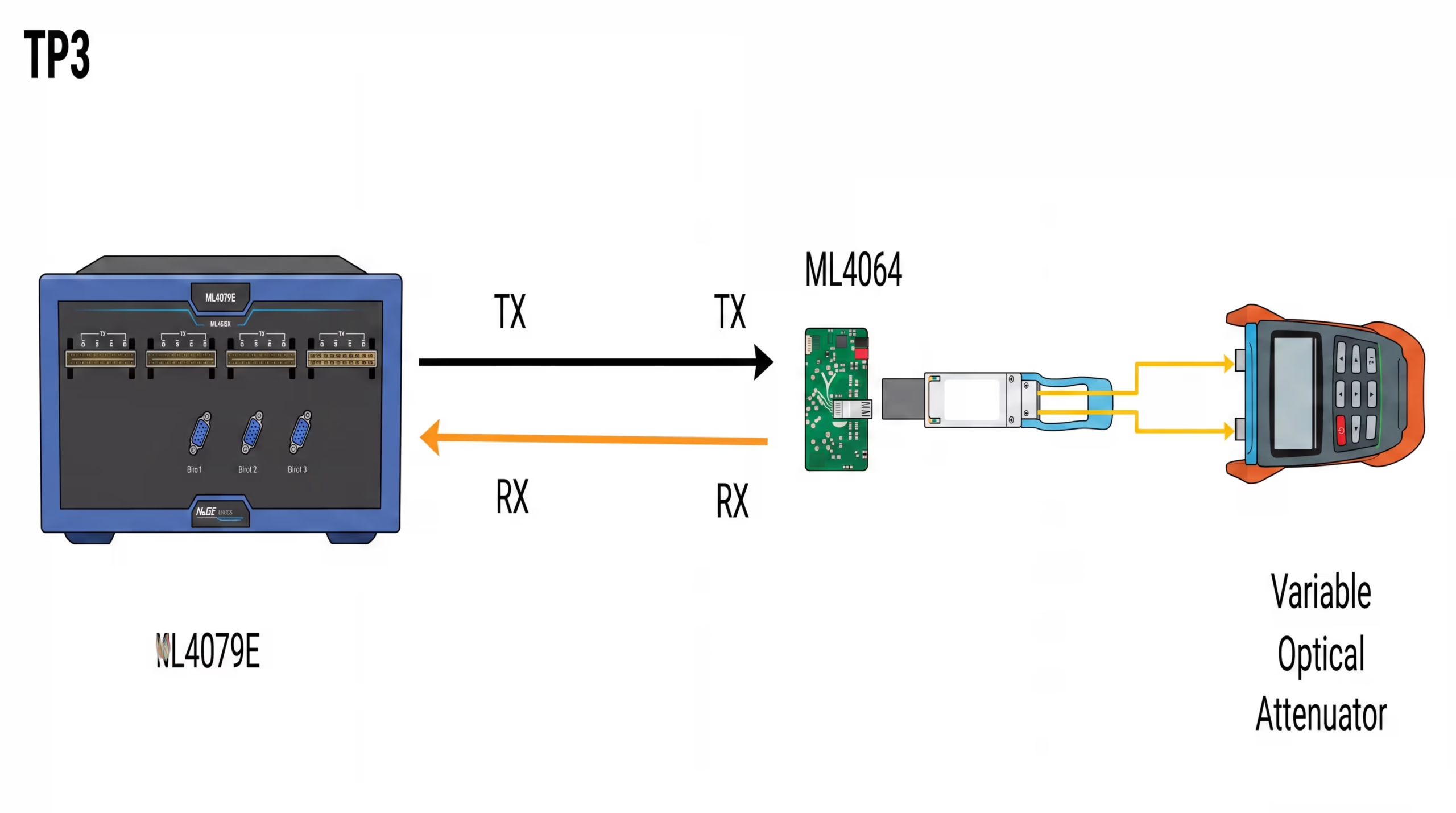
2.Optical performance(TP2/TP3)

3. Compability Bed Test

QM3400
QM3200
QM9700
QM9790
SN5600
CX-7
CX-8
BF-3
Pensandro Pollara 400
Nexus 9000
Nexus 3600
7800R4
7060DX4-32S
7060DX5-64S
7060PX5-64E
7060DX6
Power Switch Z9864F
S5448F-ON
QFX-5240-64OD
Aruba CX 10000
FlexFabric

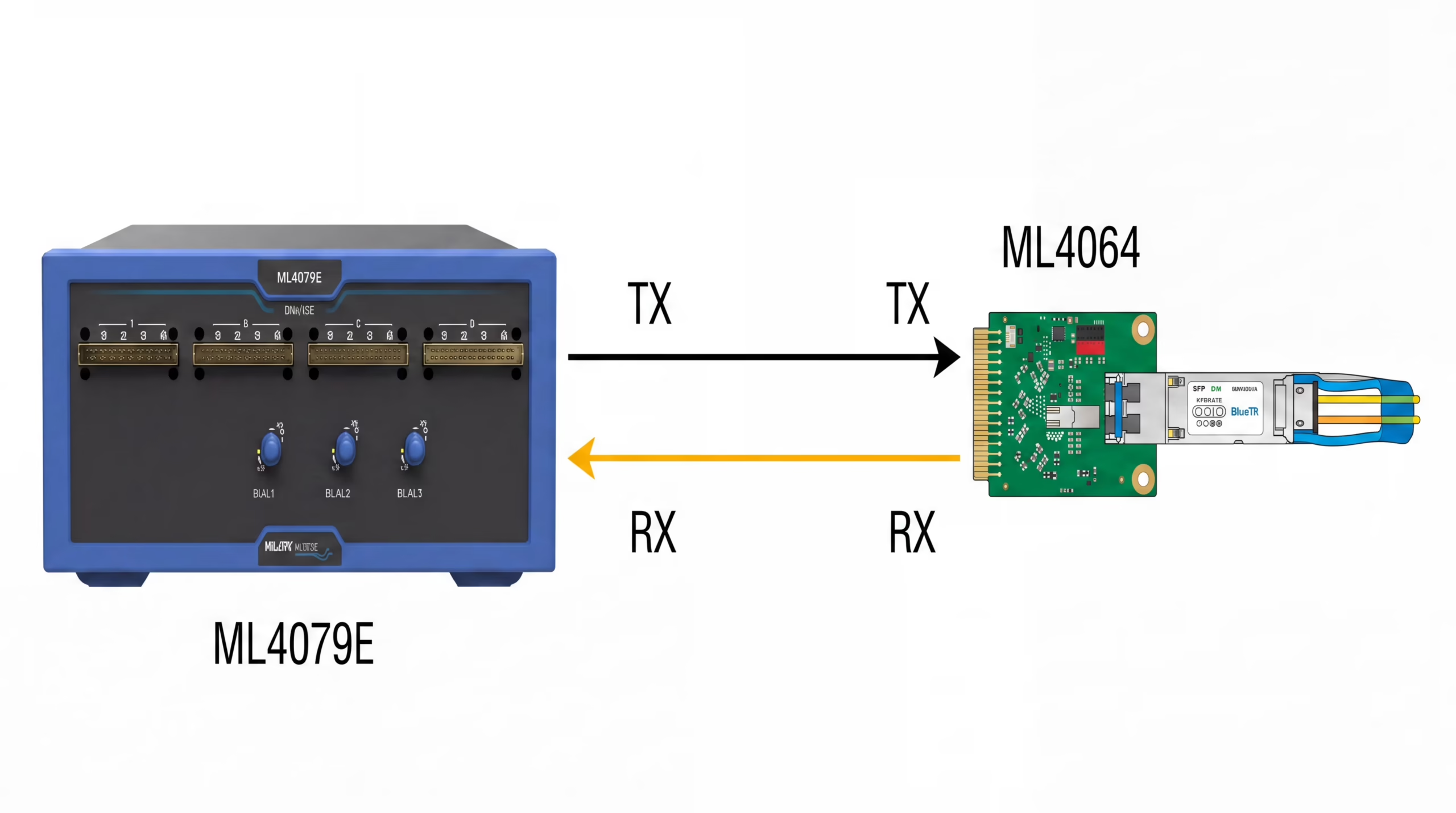
4. BER Test

The BER test was conducted over a 2-minute interval per condition. Measured BER values are reported and evaluated against the pre-FEC BER target of 1E-5, in accordance with IEEE 802.3df Annex 120G

Customer note.

ATOP does not position third-party reports as a substitute for customer AVL qualification. They are intended to shorten the evaluation path and provide confidence before customer-specific trials.

1.6T OSFP224 DR8 with Marvell Ara 3nm DSP Chip

Marvell Ara 3nm DSP. 22W power consumption under typical operating temperature: In mass production.
Hot Pluggable OSFP Form Factor, supports 1.6Tbps aggregate bit rate
MPO-16 or 2*MPO-12 Connector
8*212.5Gb/s(PAM4) optical/electrical interface
SiPho 1310nm Transmitter, Based on 3nm DSP
Maximum link length of 500m on Single Mode Fiber(SMF)
Power consumption (Full Range):23W / (Typical Range):22W

Deployment Checklist for AI Data Center Optics.

Fiber and connector discipline.

Connector & Fiber Type: Use SMF and the specified connector type: MPO-12/APC, MPO-16/APC or LC.
Connector Cleanliness: Clean and inspect every fiber endface before insertion; contamination risk increases sharply at 200G/lane.
MPO Polarity & Breakout Mapping: Confirm polarity, pin orientation and MPO-to-LC breakout mapping before live testing.
Link Budget & Loss Control: Validate optical link budget, insertion loss and return loss; minimize unnecessary patch-panel cross-connects.
Bend Radius & Strain Relief: Maintain proper bend radius and cable strain relief, especially around dense OSFP cages.
FEC & Channelization: Ensure FEC settings, lane mapping and channelization match the module and system design.
Architecture-Level BOM Control: Standardize optics, cables and panels to ensure performance, availability and repeatability.
FAE Support: Engage FAE for design review, lab validation and field issues.

Thermal and host configuration.

Case Temperature: Verify target case temperature for 1.6T OSFP 2x800G DR4.
Heatsink / Port Orientation / Airflow Direction: Verify heatsink style, port orientation, airflow direction and target case temperature.
Power Planning: Use ATOP 22W typical 1.6T power as a planning advantage; validate final SKU power in target chassis.
IHS/RHS & Flat-Top: Confirm IHS/RHS/flat-top requirements and host cage constraints before ordering samples.
Firmware/Coding: Verify CMIS/EEPROM coding, advertised application codes and switch/NIC firmware behavior.
Link Stability Checks: Run link stability checks after hot insertion, module reset, switch reboot and fiber pull/reinsert.
DOM Telemetry: Monitor DOM telemetry: temperature, voltage, bias current, Tx/Rx power and alarms.
Host Airflow: Validate adequate airflow and no recirculation around OSFP cage.

Why this matters

  • A module with the right total speed but the wrong lane architecture is not a qualification shortcut.
  • For B300/Rubin class XDR designs, customer teams should treat 200G/lane optics as a separate product path from 100G/lane DR8/FR8.
  • ATOP can help customers build a link-by-link matrix before samples are shipped, reducing trial-and-error during lab bring-up.

Recommended bring-up sequence

1) Confirm topology and lane rate. 2) Confirm connector, reach and fiber plant. 3) Load customer coding. 4) Run link-up and DOM checks. 5) Run traffic, BER/FEC and flap tests. 6) Lock the qualified BOM and deployment procedure.

Suggested Customer Validation Plan.

Phase 1

Architecture mapping

Confirm which links are 100G/lane vs. 200G/lane and map each link to ATOP product family before lab work.

Phase 2

Lab interoperability

Validate coding, link-up, DOM, traffic, BER/FEC, hot-swap, fiber pull, link flap and reboot recovery on target switches/NICs.

Phase 3

Pilot deployment

Run thermal monitoring, link stability and operational telemetry in a pilot rack or pod before broad rollout. NDA

Acceptance criteria

CategoryTest Results & Observations
OpticalDOM values within expected ranges; no unexpected alarms; clean eye/TDECQ margin where tested
ElectricalStable high-speed output/receiver behavior across the tested host profile
ProtocolCorrect application advertisement, channelization and breakout profile
TrafficStable line-rate traffic; acceptable pre-FEC BER; zero uncorrected FEC codewords
OperationsHot-swap, reboot, fiber pull and link flap recovery without abnormal behavior
ThermalCase temperature within target envelope under actual rack airflow

Why ATOP Fits Neo Cloud and Emerging AI Deployments.

Fast qualification support

Architecture mapping, sample planning, coding alignment and issue triage for AI cluster deployment teams.

Coverage across generations

Product coverage from 400G DR4 and 800G DR8 to 800G DR4 and 1.6T 2x800G DR4.

Power-sensitive 1.6T design

22W typical 1.6T power reduces thermal pressure in dense switch environments.

Evidence-led engagement

Third-party ODVT and compatibility reports help customers begin evaluation with technical confidence.

Best-fit customer scenarios

Neo Cloud providers moving quickly from 400G/NDR400 to 800G/1.6T architectures.
Emerging AI companies whose cluster design is constrained by optics availability, power or qualification timelines.
AI infrastructure teams validating B300/Rubin class 200G/lane paths while still operating 100G/lane Ethernet or NDR400 environments.
Operators who need a responsive optical partner for samples, coding, link debug, deployment checklists and ongoing supply alignment.

Customer message

ATOP is positioned as a practical optical interconnect partner for AI infrastructure teams: fast to engage, technically grounded, and focused on helping customers turn architecture plans into deployable links.

Source Basis and Technical Notes

The architecture mappings in this guide are based on NVIDIA public documentation and ATOP-supplied third-party test reports. Product qualification should always be finalized in the customer target platform, firmware and cabling environment.
Platform / ReferenceDocumentation Summary
H100 / H200NVIDIA DGX H100/H200 user guide: 4 OSFP cluster ports serving 8 ConnectX-7 single-port cards; up to 400Gb/s InfiniBand/Ethernet.
B200NVIDIA DGX B200 documentation: 4 OSFP ports serving 8 ConnectX-7 VPI; BlueField-3 DPUs for storage/management.
B300NVIDIA DGX B300 documentation: 8 OSFP ports serving 8 ConnectX-8 VPI; up to 800Gb/s InfiniBand/Ethernet.
Rubin NVL8NVIDIA DGX SuperPOD Rubin NVL8 reference: 8 OSFP ports provided by ConnectX-9 SuperNICs and BlueField-4 Ethernet connectivity.
200G/lane opticsNVIDIA MMS4A20 documentation: 800G DR4, 4-channel 200G-PAM4, MPO-12/APC, SMF up to 500m.
100G/lane opticsNVIDIA MMS4X00-NM documentation: 800G 2xDR4, 8-channel 100G-PAM4, 500m reach and 17W max power.
Longer reachNVIDIA MMS4X50-NM documentation: 800G 2xFR4 / 2x400G, LC duplex, 2km reach.
ATOP validationATOP-supplied third-party ODVT and switch interoperability reports for 800G OSFP DR8 and 400G QSFP-DD DR4.
Note: This guide avoids claiming official NVIDIA certification. It is a customer-facing architecture and product mapping guide supported by public NVIDIA architecture references and ATOP validation evidence.

Next Step: Build the Customer Link Matrix

ATOP can help translate your AI cluster architecture into an optical BOM, validation plan and deployment checklist.
1

Share architecture

GPU generation, switch platform, link distance, connector type, fiber plant and target schedule.
2

Map products

ATOP maps each link to 400G, 800G or 1.6T products and identifies 100G/lane vs. 200G/lane paths.
3

Run qualification

Samples, coding, switch/NIC interop, BER/FEC, telemetry and thermal checks.
4

Scale deployment

Lock BOM, deployment notes, supply plan and field support path.

ATOP: fast, technically grounded optical interconnect support for AI factory deployment.

This guide is intended for customer architecture discussions and deployment planning. Final product selection and qualification should be completed against the customer target platform.
chevron-rightarrow-rightcheckmark-circle