
Manufacturing & Quality
4.0 factories, automation, validation
Partner Portal
Access tools, pricing, ESG data
GTC Berlin was busy from the first morning to the last. Three of us made the trip: Søren Sørensen, our chief growth officer, Daniel Tidselbak, our chief commercial officer, and James from marketing.
We didn't have a stand this time. We went to listen, walk the floor and meet as many customers and partners as we could. The halls were packed and the meetings ran back to back.
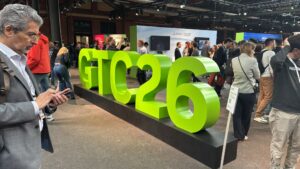
Europe was front and centre. Jensen Huang's keynote spoke about European companies, sovereign AI and AI factories, along with ready-to-go systems and AI moving onto laptops, desktops and workstations. The floor matched it. There were distributors, integrators, neoclouds and a lot of very young startups.
Robots were everywhere. One prototype was built to install optical transceivers and cables in the field, because there aren't enough people to do the job. AI was turning up in audio and special effects too.
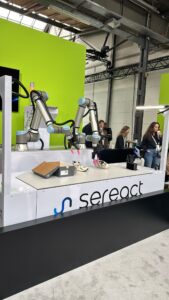
The speed of building stood out. NVIDIA showed a server that now goes together in under five minutes, down from about two hours. No cables, fully liquid cooled, and designed to be built and deployed fast.
For us, the network was the part that mattered most. Co-packaged optics is now in volume production on the Spectrum-X switch. It's a real step forward. But the whole industry is also chasing hardware that's faster to build and easier to service. Those two things pull in different directions.
Our view is simple. Pluggables, near-packaged and co-packaged optics will all have a place. Customers need the flexibility to choose the right one for each deployment. They also need a supplier who keeps pace as lane speeds move from 100G to 200G and beyond.
What does it mean for serviceability when the optical engine sits inside the switch package instead of in a module you can swap?"
Daniel Tidselbak, chief commercial officer
We asked them both five questions on the way home.
Daniel: People right across the AI space. Two things stood out. The building keeps going, and the systems already out there keep running in all sorts of forms. And cost and time. Both are areas where we're relevant.
Søren: Things continue to move very fast. AI is going into every corner of our lives, from manufacturing to the rest of society. That pushes the need for even more GPUs and even more connectivity.
Daniel: Robots. Robots everywhere! I saw a prototype of a robot designed to install optical transceivers and cables in the field. It's there to solve the lack of manpower for those jobs.
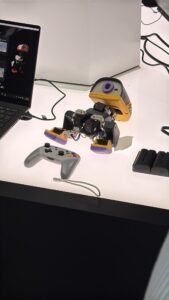
Søren: The little robot duck Jensen took on stage. It's a small gadget and it's quite funny, but I think it's a major step. It makes AI playable and real for a lot of people. You train it, and it carries it out right in front of you.
It might be a small gadget, but it's a major step towards making AI real for many people.
Søren Sørensen, chief growth officer
Daniel: Damn good question. Power was a concern for some.
Søren: Yes, it's getting more efficient. But it's not getting as efficient as the need for more gear and more data centers. At the TD SYNNEX opening event we heard that Europe's data center capacity is set to grow several times over by 2030. It's mind-blowing. There's a control question too. One technologist I spoke to tests some of the most advanced robots around, and they still take the batteries out at night. People aren't comfortable with a robot running when no one is watching.
Daniel: We're yet to see a reference architecture. The key is 200G-lane optics, so going from 100G lanes to 200G lanes is the big step. No doubt we'll see 400G lanes faster than we think. Right now, though, CPO is being pushed as the next frontier. And while the focus is on NVIDIA, AMD is starting to hit the market. That could change approaches and architectures for customers.
Søren: We saw the first CPO. It might be a thing, but most likely a limited one in a small ecosystem, because you lose flexibility. For the transceiver industry there'll be a big surge in the coming years, even at lower data rates. When everyone has an AI laptop, you need faster connections everywhere.
Søren: We now have a brand that's well known among the neoclouds, and it's growing fast with the partners who work with high-speed and AI customers. They know us. They like to speak to us. We like to speak to them. That only comes with hard work. Being present, taking the meetings, taking the long days,
They know us. They like to speak to us. We like to speak to them."
Søren Sørensen, chief growth officer
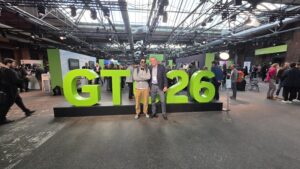
Three busy days, a lot of good conversations and plenty to think about. If we didn't get to meet you in Berlin, get in touch. We'd be glad to pick up the conversation.